Guides
The Best Online Homeschool Programs, Compared
Compare the best online homeschool program options by cost, accreditation, teaching style, and community so you can choose the right fit for your family.
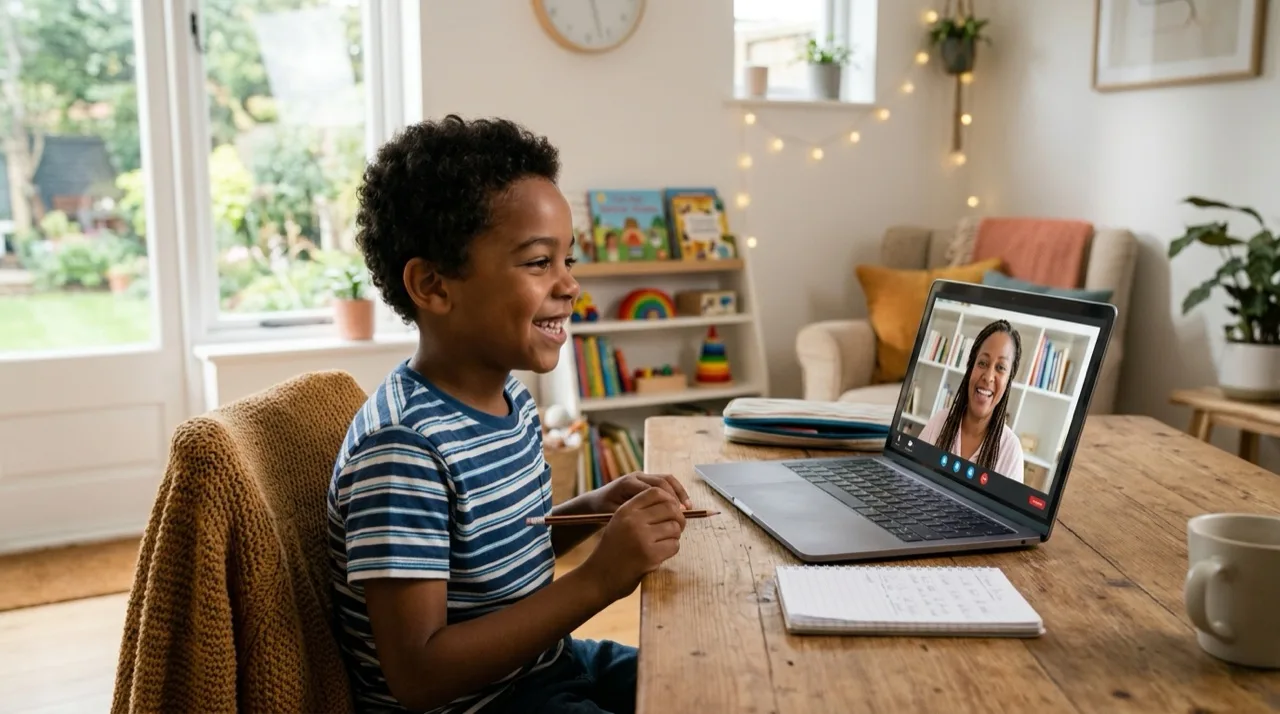
The Best Online Homeschool Programs, Compared
If you have started searching for an online homeschool program, you already know the problem: there are dozens of options, the pricing is all over the place, and every website promises to be the best. One platform is a self-paced video library, the next is a tuition-free virtual school, and the one after that is a co-op meeting at a church down the road. They all call themselves "homeschool," but they are built for very different families.
This guide cuts through that noise. Instead of ranking programs one to fifteen, we will compare them by the things that actually change your daily life: how the teaching works, what it costs, whether it is accredited, and how much community your child gets. By the end you will know which type of online homeschool program fits your family, not just which one has the loudest marketing.
Homeschooling Is No Longer the Outlier
First, some context that should make you feel less alone. Homeschooling is now one of the fastest growing education models in the country. An estimated 3.4 million school-age children were homeschooled in the 2024-2025 school year, about 6.3 percent of all K-12 students, up from roughly 3 percent before the pandemic (Source: National Home Education Research Institute). Growth ran near 4.9 percent that year, almost three times the pre-pandemic rate, and 36 percent of reporting states hit their highest homeschool enrollment numbers ever (Source: Johns Hopkins Institute for Education Policy).
The community is also changing. Black families are one of the fastest expanding groups in the movement, often building culturally grounded co-ops and microschools. Cultural Roots Homeschool Cooperative in Birmingham, started by a former special education teacher, now serves more than 125 students (Source: EdChoice). If you are a family looking for both academic quality and belonging, you are part of a large and growing wave.
The Four Types of Online Homeschool Program
Almost every option you will find falls into one of four buckets. Knowing the buckets is more useful than memorizing brand names.
1. Self-Paced Curriculum Platforms
These give you lessons, videos, and automatic grading that your child works through independently. You stay the teacher and project manager; the platform supplies the content.
- Time4Learning runs about $39.95 per month for up to seven courses, with extra courses at $5 each (Source: Time4Learning). It is a curriculum, not a school, so accreditation does not apply.
- Power Homeschool (Acellus) is around $25 per month for video-based, self-paced K-12 learning (Source: Tutors.com).
- Khan Academy offers free core instruction, with paid structured options in the roughly $30 to $45 per month range (Source: Homeschool Start Guide).
Best for: budget-conscious families who want flexibility and are comfortable steering the day themselves.
2. Accredited Virtual Schools
These are full online schools with enrollment, transcripts, and in many cases teachers. Some are tuition-free public options.
- K12 / Stride runs tuition-free public virtual schools in 30-plus states and even ships a computer and materials to enrolled families. Its private courses generally run $260 to $450 for 12-month access, more when teacher-led (Source: Brighterly).
- Connections Academy, Bridgeway Academy, Keystone, and Abeka Academy are commonly cited accredited choices, with paid tuition that varies widely by grade and service level (Source: Brighterly).
Best for: families who want official accreditation, transcripts, and a school-like structure without a physical building.
3. Faith-Based Programs
If your family wants faith woven through the curriculum, programs like Seton (Catholic) at roughly $800 to $1,200 per year, or video packages from providers such as Abeka, are built for you (Source: Homeschool Start Guide). Costs swing from nearly free PDF curricula to $1,000-plus full-service packages.
Best for: families who want academics and values taught together from a specific tradition.
4. Co-ops and Microschools
This is the fastest moving corner of the whole movement. Microschools, small learning hubs of about 5 to 15 students, are growing even faster than homeschooling overall, with a reported 220 percent jump in parents considering them in a single year (Source: OpenEd). More than half of microschools operate as homeschooling cooperatives (Source: National Microschooling Center). Families interested in this model report a willingness to pay around $433 per month for it (Source: EdChoice).
Best for: families who want live teaching, real relationships, and a sense of belonging rather than a screen their child works through alone.
A Quick Side-by-Side
To see the trade-offs at a glance:
- Self-paced platforms: lowest cost (often $25 to $45 per month), maximum flexibility, but you are the teacher and there is little to no peer community.
- Accredited virtual schools: transcripts and structure, sometimes free through public options, but the pace and format can feel rigid.
- Faith-based programs: values and academics together, costs from nearly free to $1,200-plus per year, with community depending on the provider.
- Co-ops and microschools: live teaching and genuine belonging, typically a higher monthly fee, but the model parents are increasingly choosing on purpose.
Notice that no single column wins on every row. That is exactly why "best" is the wrong question and "best fit" is the right one.
How to Compare Programs Without Getting Overwhelmed
Use these five questions on any online homeschool program before you pay:
- Who does the teaching? Self-paced software, a live educator, or you? This single answer shapes your entire week.
- What does it really cost? Online programs range from about $400 to $6,000 per child per year, and self-led is far cheaper than live-taught (Source: Tutors.com). Watch for per-course add-ons that quietly stack up.
- Is it accredited, and do you need it to be? Accreditation matters for transcripts and some college pathways. A pure curriculum platform is not "lesser," it just is not a school.
- How much community is built in? Academic content is only half of an education. Isolation is the most common regret families report.
- Does it fit your child and your values? A great program for one family can be the wrong shape for yours. Fit beats fame.
How Family World School Helps
Most of the four models force a trade-off. Self-paced platforms are affordable but lonely. Accredited virtual schools add structure but can feel rigid and impersonal. Strong local co-ops offer belonging but are hard to find if one is not already in your neighborhood.
Family World School is built as a homeschool cooperative rather than a marketplace, so it brings the pieces together. That means vetted educators teaching live online classes, one flat, transparent monthly fee instead of a pile of per-course charges, and a real community where children and parents actually know each other. It was created mainly to serve African American and continental African families who want culturally grounded, high-quality learning, while remaining open to all. If the co-op model from section four is what your gut is drawn to, but you do not have a local hub, this is designed to be that hub, online.
The Takeaway
There is no single best online homeschool program, only the best fit for your child, your budget, and the kind of community you want around your family. Start by naming which of the four types matches your life, then run any specific program through the five questions above. That simple process will save you months of trial and error and a fair amount of money.
If a live, community-centered approach sounds like what your family has been missing, explore the programs and classes at Family World School, or book a short consultation to talk through your child's needs. You are not just choosing curriculum. You are choosing the people who will learn alongside you.