About FWS
How the Family World School Cooperative Model Works
See how the Family World School homeschool cooperative works: vetted educators, live online classes, one flat monthly fee, and real community for your family.
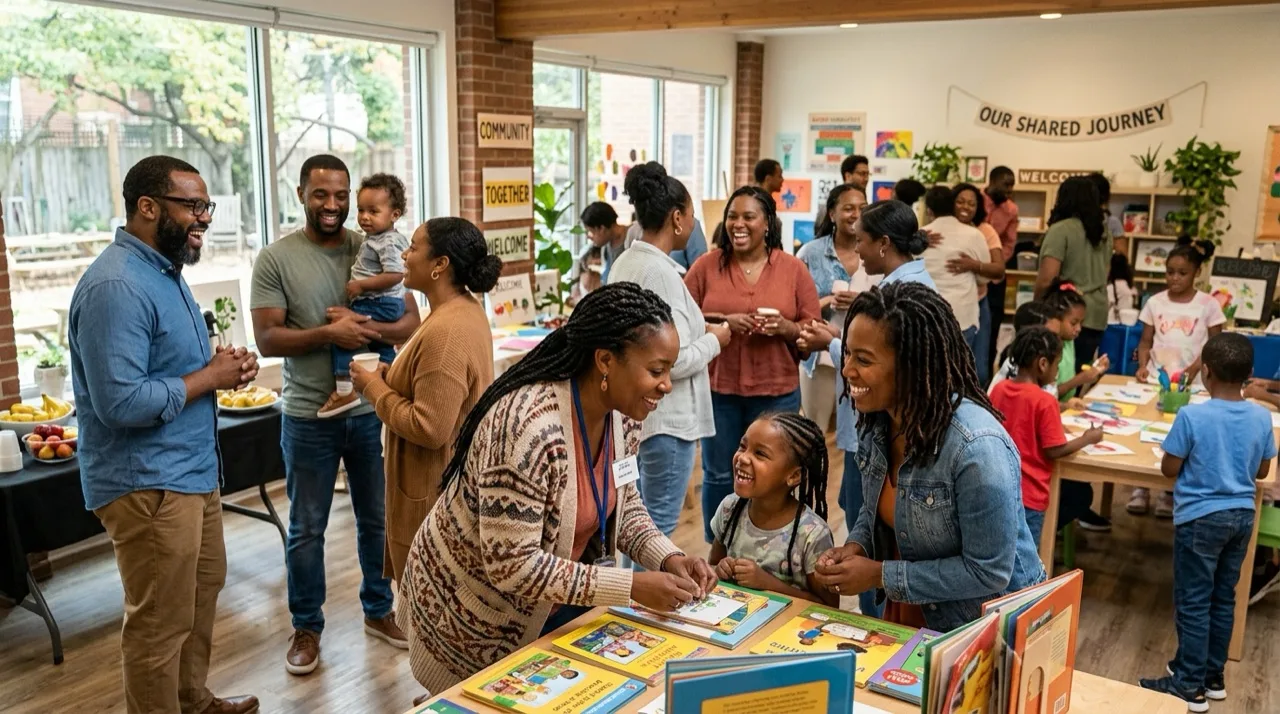
How the Family World School Cooperative Model Works
You decided to homeschool. Then came the harder part: doing it without burning out, without spending a fortune, and without watching your child learn alone at the kitchen table. This is the gap a homeschool cooperative is built to fill, and it is exactly why Family World School (FWS) exists. We are not a website where you shop for the cheapest tutor. We are a community-owned cooperative where families pool trust, talent, and resources so every child gets a real education and a real sense of belonging.
If you are weighing your options, it helps to understand what a homeschool cooperative actually is, why so many families are turning to this model right now, and how the FWS version works in practice.
What is a homeschool cooperative?
A homeschool cooperative, often shortened to "co-op," is a group of homeschooling families who come together to share teaching, learning, and community. Instead of every parent being expected to teach every subject alone, the group divides the work. One person may lead a writing class, another handles science, and a vetted educator may run math or a foreign language. The result is a shared learning environment that keeps the freedom of homeschooling while removing the isolation.
Co-ops have existed for decades in church basements, community centers, and living rooms. What is new is the scale and the format. Many cooperatives now meet online, which means a family in Atlanta, one in Houston, and one in Accra can sit in the same live class.
The benefits are well documented. A co-op gives children classmates beyond their own siblings, gives them access to advanced subjects a single parent may not be equipped to teach, and builds a community of parents working toward the same goal of quality home education (Source: Minno Kids). In other words, it solves the two questions every new homeschooler hears: "What about socialization?" and "How will you teach everything?"
Why families are choosing co-ops now
Homeschooling is no longer a fringe choice. An estimated 3.408 million school-age children were homeschooled in the United States during the 2024-2025 school year, about 6.26 percent of the K-12 population (Source: National Home Education Research Institute). Growth is running near 4.9 percent a year, almost three times the pre-pandemic rate, and 36 percent of reporting states recorded their highest homeschool enrollment numbers ever (Source: Johns Hopkins Institute for Education Policy).
Alongside that surge, small-group learning has exploded. Between one and two million students now attend microschools full-time, with the average microschool serving just 22 students, and roughly 55 percent of them operate under homeschooling rules (Source: National Microschooling Center). Families are clearly choosing the warmth of small communities over large, impersonal systems.
This shift has been especially strong among Black families. The share of Black households homeschooling jumped from 3.3 percent at the start of 2020 to 16.1 percent by that fall, the largest increase of any group (Source: CNN). Parents cite a desire to teach their children their full history with dignity, to protect their child's self-esteem, and to have more control over how their child is treated and what they are taught (Source: TIME). As of 2024, roughly 41 percent of homeschooling families identified as non-white (Source: Black Enterprise).
Families choose this path for many reasons: values, academic flexibility, safety concerns, mental health, special needs, advanced learning, and simply wanting more time together (Source: Research.com). A cooperative honors all of those reasons while giving back the structure and friendship that solo homeschooling can lack.
How the Family World School cooperative model works
Family World School takes the proven co-op idea and runs it as a true cooperative, community-owned and built around belonging. Here is what that looks like for your family.
Vetted educators, not a guessing game
In an open marketplace, you scroll through hundreds of profiles and gamble on a stranger. At FWS, educators are vetted before they ever teach your child. We review their background, their teaching approach, and their fit with our community values. You are not screening tutors alone. The cooperative does that work so you can trust the people standing in front of your child.
Live online classes with real classmates
Learning at FWS happens in live, online classes, not pre-recorded videos a child watches in silence. Your child sees faces, raises a hand, joins discussion, and builds friendships with other homeschooled children across the country and beyond. This is the socialization parents ask about, delivered on purpose rather than left to chance.
One flat, transparent monthly fee
Marketplaces charge per class, per tutor, and per add-on, and the bill grows every time your child wants to try something new. FWS uses one flat, transparent monthly fee. You know your cost up front, and your family can take part in the community without a surprise invoice for each course. Predictable pricing is part of how a cooperative protects its members.
Real community and belonging
A cooperative is a relationship, not a transaction. FWS is built for families who want a place to belong, with a particular heart for African American and continental African families while remaining open to all. Parents connect with parents. Children grow up alongside friends who share their journey. The "village" in homeschooling is not a slogan here. It is the structure.
A parent's role you can actually sustain
One of the quiet reasons families leave solo homeschooling is exhaustion. You are the teacher, the principal, the counselor, and the lunch lady all at once. A cooperative redistributes that load. In the FWS model, vetted educators carry the heavy instruction, live classes hold your child's attention and accountability, and the community shares the planning and encouragement. Your job shifts from doing everything to guiding your own child, which is the part most parents wanted in the first place. That sustainability is not a luxury. It is what keeps a homeschool journey going for years instead of months.
What a typical week can look like
Families often ask what the rhythm feels like day to day. While every household sets its own pace, a common pattern is a blend of live cooperative classes and independent learning at home. A child might join a live morning class with classmates and a vetted educator, then spend the afternoon on reading, projects, or practice at the family's own schedule. Group classes anchor the week and provide social connection, while the at-home time preserves the flexibility that drew the family to homeschooling in the first place. This blend mirrors what the data shows works well in microschools and hybrid models, where small live groups combine with personalized, self-paced learning (Source: National Microschooling Center).
Because the cooperative meets online, the rhythm travels with you. Families who relocate, travel, or live far from a local co-op still keep their community and their classes. Geography stops being a barrier to belonging.
Co-op or marketplace: how to tell the difference
When you compare options, ask three questions. First, who carries the risk of finding good teachers, you or the organization? In a marketplace, you do. In the FWS cooperative, we vet educators for you. Second, is the pricing one clear number or a stack of per-class charges? A co-op favors transparency. Third, are you buying a service or joining a community? A marketplace sells access. A cooperative offers belonging.
If you want full control and are happy to assemble everything yourself, an open marketplace can work. If you want vetted teachers, live classes, predictable cost, and a community that knows your child's name, a cooperative like Family World School is built for you.
The takeaway
A homeschool cooperative gives families the best of both worlds: the freedom of home education and the support of a shared community. With homeschooling at record numbers and small-group learning growing fast, the model has never been more relevant. Family World School brings it to life with vetted educators, live online classes, one flat monthly fee, and a genuine sense of belonging, all owned by the families it serves.
Ready to see if it fits your family? Explore our programs, book a quick consult with our team, and come meet the community. Your child does not have to learn alone, and neither do you.