Trust & Safety
How We Vet and Support Our Educators: Safeguarding First
How Family World School finds vetted homeschool teachers, with background checks, safeguarding training, and ongoing support that keeps your child safe.
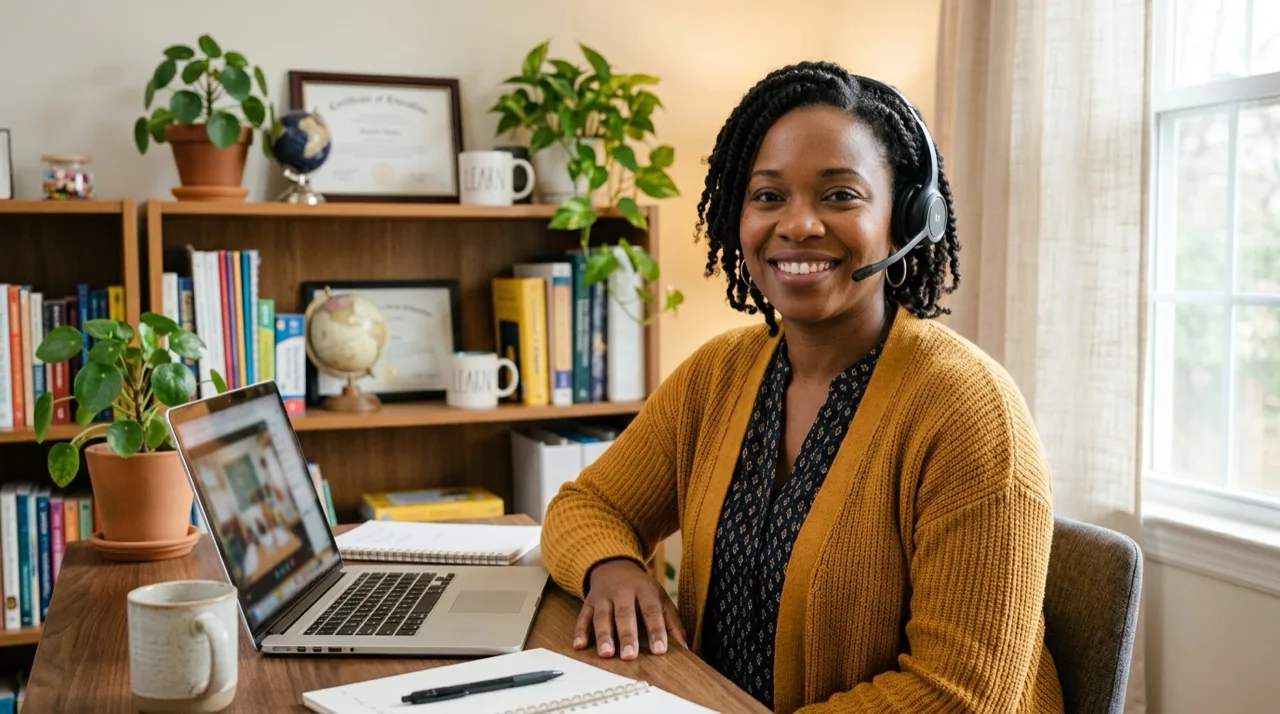
How We Vet and Support Our Educators: Safeguarding First
When you let a stranger teach your child, even over a screen, you are extending a profound act of trust. For homeschooling families, that trust is the whole foundation. You left the conventional system partly to have more control over who shapes your child's days. So the question every parent should ask any online program is simple and non-negotiable: how do you know your educators are safe?
This is our honest answer. At Family World School, vetted homeschool teachers are not a marketing phrase, they are the result of a deliberate, multi-step process we run before any educator ever meets a student, and a commitment we keep going long after. Safeguarding comes first. Everything else, the curriculum, the live classes, the sense of belonging, is built on top of it.
Why Vetting Matters More Than Ever
Home education is no longer a fringe choice. An estimated 3.4 million school-age children were homeschooled in the United States during the 2024-2025 school year, roughly 6.3 percent of the K-12 population, and the model grew about 4.9 percent that year, nearly three times its pre-pandemic pace (Source: National Home Education Research Institute). Related models are expanding too: the National Microschooling Center estimates around 95,000 microschools and pods now serve over one million students (Source: National Microschooling Center).
Safety is a big reason families make the move in the first place. In one large survey, 83 percent of parents cited concern about the school environment, including safety, as a reason for homeschooling (Source: Pew Research Center). It would be a painful irony to leave one environment over safety worries only to hand your child to an unvetted adult online. That is exactly why our screening is rigorous, and why we never treat it as a box to tick.
Our Vetting Process, Step by Step
We treat hiring an educator the way a careful family would treat hiring a caregiver. Credentials matter, but character and conduct matter just as much.
1. Identity and Credential Verification
Every applicant first proves they are who they say they are. We verify identity, then confirm education history, teaching qualifications, and prior work experience. The United States has no single national database for these records, so we cross-check sources rather than trusting a single document (Source: BackgroundChecks.com). For an online program this is especially important, because educators often apply from a different state than the students they will teach.
2. Criminal Background Checks
Strong tutor and educator screening typically includes a criminal history search, a national and state sex offender registry check, and identity verification through Social Security records (Source: National Student Support Accelerator, Stanford University). Because our educators may live anywhere, we make sure checks cover an applicant's state of residence, not only where a student happens to be. Where the law and the role allow for it, we use the most thorough level of screening available rather than the minimum.
3. References That Speak to Working With Children
A clean record tells you what someone has not done. References tell you what they are actually like with kids. We require references, including at least one that speaks directly to the applicant's experience working with children, a practice that child-safety experts recommend alongside formal checks (Source: National Student Support Accelerator, Stanford University). We call them. We ask real questions. We listen for hesitation as much as for praise.
4. Teaching Demonstration and Values Fit
Safeguarding is not only about preventing harm, it is also about who genuinely belongs in front of children. Candidates teach a live sample lesson so we can see their warmth, classroom management, and ability to engage learners. We also talk openly about our values as a community-owned cooperative, so educators understand the families they will serve and the standard of care we expect.
Safeguarding Does Not Stop at Hiring
The strongest youth-serving organizations treat a background check as a starting line, not a finish line. We have built our day-to-day practices on the same principles that guide the most respected child-protection programs.
Two-Deep Leadership and No One-on-One Secrecy
Leading child-safety frameworks require that a child is never alone with a single unrelated adult, and they prohibit one-on-one contact in person, online, over video, by phone, or by text (Source: Scouting America). We apply this thinking to virtual classrooms. Our classes are group settings by design, communication runs through monitored channels, and private, unsupervised adult-to-child contact is not permitted. Transparency is the safeguard.
Safeguarding Training and Mandatory Reporting
Respected programs require all volunteers and staff to complete youth-protection training before any contact with children, and to renew it on a regular cycle (Source: Scouting America). Every adult in those programs is also a mandated reporter of suspected abuse, with clear duties to alert authorities (Source: Scouting America). Our educators are trained to recognize warning signs, follow clear conduct boundaries, and report concerns without delay. Knowing the rules is not optional, and neither is following them.
Ongoing Observation and Family Feedback
Because our classes are live and group-based, behavior is visible, not hidden. We keep open lines for parents to raise concerns, and we act on them. Safeguarding is a culture that everyone, staff, educators, and families, helps maintain, rather than a policy filed away in a drawer.
How Family World School Helps
Vetting is hard, time-consuming work, and most families do not have the tools to run criminal checks, verify credentials across states, or monitor every interaction. That is the gap a cooperative is built to fill.
Family World School is community-owned, not a marketplace where anyone can list themselves and you take your chances. Because we are a cooperative, every educator passes through the same safeguarding-first process described above before they teach a single live class. Families pay one flat, transparent monthly fee, with no per-class bidding or hidden upsells, which means our incentive is your child's safety and growth, not transaction volume. And because we serve families who often share cultural roots and values, mainly African American and continental African families, while remaining open to all, the people teaching your child understand the community they are part of. You get vetted educators, live classes, and real belonging in one place.
The Takeaway
Choosing where your child learns is one of the most important decisions you will make, and you deserve more than a promise. You deserve a process. At Family World School, that process means verified identities, thorough background checks, references that speak to working with children, live teaching demonstrations, and ongoing safeguarding practices like two-deep leadership, mandatory training, and clear reporting. Safeguarding first is not a slogan for us, it is the order we do things in.
If safety and community are what pulled you toward home education, come see how we protect both. Explore our programs, book a short consultation to ask us anything about our vetting, or join the community and meet the educators who put your child first.
Sources: