Mission
Why Representation Matters: Education That Reflects Your Child
Discover why culturally responsive education helps children thrive, and how a homeschool cooperative offers learning that reflects your child and your values.
Why Representation Matters: Education That Reflects Your Child
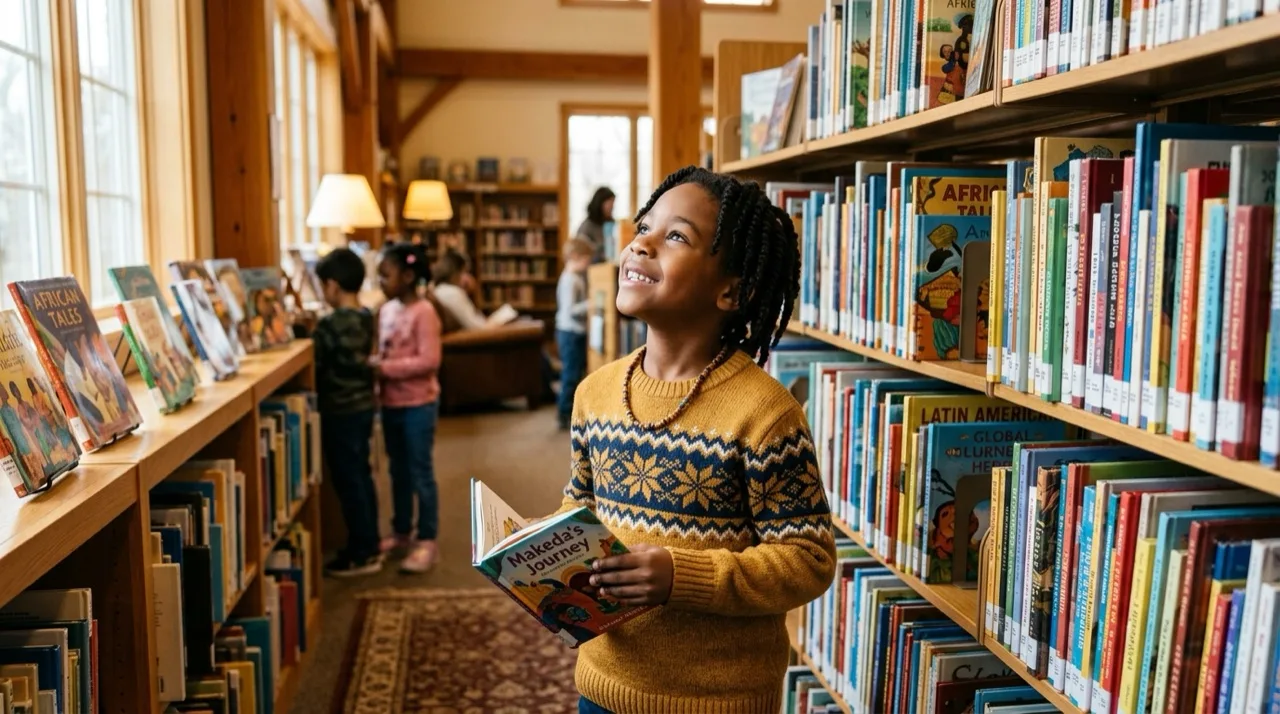
Think back to the first time you opened a book and saw a character who looked like you, spoke like the people you love, and lived a life you recognized. For some children, that moment never comes in a classroom. For others, it arrives every single day. That difference is not small. It shapes how a child sees their own potential, and it sits at the heart of what educators call culturally responsive education.
For a growing number of families, especially African American and continental African families, representation has moved from a quiet wish to a deciding factor in how and where their children learn. This article explains what culturally responsive education really means, what the research says about its impact, and how to find or build learning that genuinely reflects your child.
What Culturally Responsive Education Actually Means
Culturally responsive education is a teaching approach that connects what a child learns to who that child is. It treats a student's background, language, history, and family experience as strengths to build on, not gaps to fix. In practice, it can look like reading literature by authors from your child's heritage, studying history from multiple perspectives, or simply being taught by an educator who understands and respects the community a child comes from.
It is worth being clear about what this is not. Culturally responsive education is not about lowering standards or replacing core academics. It is about raising engagement by making rigorous learning feel relevant. When a child sees themselves in the material, they lean in. When the material erases them, they often quietly check out.
The Research: Representation Drives Real Outcomes
This is not just an emotional argument. A solid and growing body of research links culturally responsive teaching to measurable benefits.
Studies have found that culturally responsive teaching can improve academic performance, strengthen critical thinking, and build student confidence, while helping to reduce achievement gaps (Source: ScienceDirect, Journal of Educational Research). Researchers have also documented social and emotional gains, including stronger peer relationships, higher participation, and reduced feelings of alienation among students who feel seen (Source: EBSCO Research Starters). Students who report receiving culturally relevant teaching also report more positive academic outcomes and healthier racial identity development (Source: NYU Steinhardt Metro Center).
The reverse matters too. Consider children's books, one of the most basic mirrors a young learner has. As recently as the year 2000, only about 3 percent of children's books featured a person of color. By 2024, the Cooperative Children's Book Center reported that for the first time more than half of the titles it received had significant content reflecting people of color, though only 37 percent featured a primary character who was a person of color (Source: Cooperative Children's Book Center, UW-Madison). Progress is real, but it is recent and uneven. Many children still spend years in classrooms where the stories rarely include them.
The takeaway is simple. Representation is not a bonus feature. It is part of how children learn to believe that achievement belongs to them.
Why So Many Families Are Choosing a Different Path
Families are not waiting for the system to catch up. They are voting with their choices.
As of 2024, roughly 3.7 million students were homeschooled in the United States, about 6.7 percent of all school-age children, and approximately 41 percent of homeschooling families identified as non-white (Source: National Home Education Research Institute). The shift among Black families has been especially sharp. Census data showed homeschooling among Black families rose from about 3.3 percent in spring 2020 to roughly 16 percent by that fall, a near tripling in a matter of months (Source: TIME).
The reasons families give are telling. In one widely cited survey, 40 percent of African American parents said they wanted to give their child more instruction on Black culture and history, and a significant share pointed to a desire to avoid racism in school environments (Source: TIME). These are parents seeking education that affirms their children rather than asking them to shrink.
At the same time, the wider landscape is diversifying. Microschools, learning pods, and cooperatives are now among the fastest growing models in American education, with estimates of 1 to 2 million students participating in some form by 2025 (Source: Microschooling Center, American Microschools Sector Analysis). Notably, 37 percent of prospective microschool founders are people of color, a sign that communities are not just opting out of one system but actively building better ones (Source: Microschooling Center).
Representation Is About Belonging, Not Just Curriculum
It is easy to reduce representation to a reading list. But for children, it runs deeper. Representation is the teacher who pronounces their name correctly without being asked twice. It is the classmate whose family celebrates the same holidays. It is the sense that you do not have to translate yourself to participate.
Belonging is a learning condition, not a luxury. A child who feels they belong takes intellectual risks, asks questions, and persists through hard material. A child who feels like an outsider spends energy managing that feeling, energy that could have gone into learning. This is why community and representation, taken together, so often show up in the research as drivers of both confidence and achievement.
How Family World School Helps
Family World School was built around exactly this need. It is a homeschool cooperative, community-owned rather than a marketplace, designed to give children learning that reflects who they are while holding to high academic standards.
A few things make the cooperative model a natural fit for families who care about representation:
- Vetted educators who reflect your community. Children learn from teachers who are carefully selected and who understand the cultures, histories, and experiences of the families they serve, with a particular focus on African American and continental African families while remaining open to all.
- Live online classes. Lessons happen in real time, so children build genuine relationships with their teachers and classmates rather than working in isolation through a screen.
- One flat, transparent monthly fee. Instead of paying per class or piecing together a patchwork of providers, families pay a single clear price. That keeps quality education within reach and removes the guesswork.
- Real community and belonging. Because it is a cooperative, families are members, not just customers. Children find peers who share their world, and parents find a network that shares their values.
The goal is straightforward. Every child deserves an education where they can see themselves in the lessons, in their teachers, and in the friends learning alongside them, without sacrificing rigor to get it.
What Parents Can Look For
Whether or not a cooperative is right for your family, you can evaluate any learning option through a representation lens. A few practical questions help:
- Whose stories are told? Look at the books, history, and examples used. Does the curriculum include your child's heritage as a normal part of learning, not just a single unit in February?
- Who is teaching? Educators who understand a child's background can affirm identity in ways a strong curriculum alone cannot.
- Is there real community? Does your child have peers and mentors who share their experience, so belonging is built in rather than hoped for?
- Are standards high? Representation and rigor are not a trade-off. The best programs deliver both.
The Takeaway
Culturally responsive education is not a trend or a slogan. It is a well-supported approach that helps children learn more, believe in themselves more, and stay engaged longer, because the learning finally reflects them. The families reshaping education today are not asking for less. They are asking for more: more relevance, more belonging, and more proof that excellence and identity can live in the same classroom.
If that is the kind of education you want for your child, you do not have to build it alone. Explore the Family World School cooperative, book a consultation to ask your questions, and see what it feels like to join a community where your child is reflected, respected, and ready to thrive.
Sources: ScienceDirect, mixed-methods study on culturally responsive teaching; EBSCO Research Starters, culturally responsive teaching; NYU Steinhardt Metro Center, Culturally Responsive Education Research Fact Sheet; Cooperative Children's Book Center, UW-Madison Diversity Statistics; National Home Education Research Institute, Fast Facts on Homeschooling; TIME, Homeschooling Has Become More Popular Among Black Families; Microschooling Center, American Microschools Sector Analysis 2025.